



The courage gap is the most expensive item on your balance sheet. It does not appear on it.
It takes two forms. Both are costing you now.
Courage is not a character trait. It is a structural capability — one that can be measured, developed, and scaled across your organisation. When it is missing, everything slows down. When it is present, everything changes.

The Two Forms
The gap takes two forms. They hit different lines.
Together, they represent the largest source of recoverable performance in most organisations. It requires no new strategy or technology. Only naming what is already known.
The Defensive Gap
The truth not spoken.
Can I say what I see?
The risk assessment that goes unvoiced. The strategy flaw that everyone sees and no one names. The early warning that reaches the decision-maker six months too late.
Bottom-line liability
Decisions made late. Compliance failures that germinate in silence. Talent that quietly walks away.
Psychological safety addresses this gap. Make the room safe enough and people will speak.
The Proactive Gap
The opportunity not claimed.
Will I act on what I believe?
The new market no one is willing to own. The capability that should exist but does not. The future the organisation needs to build but is afraid to author.
Top-line liability
Revenue not captured. Products not launched. Strategic positions surrendered by default.
No safety framework produces this. It requires leaders to act before they are certain, to commit to a direction the organisation has not yet endorsed.
“The defensive gap costs what you already have. The proactive gap costs what you could have become.”
— The Courage Factor, Ralf Schneider —
The Symptoms
What courage costs when it is absent.
Most organisations do not have a courage problem they can see. They have a courage deficit that shows up as something else entirely.
Decisions delayed, opportunities missed
When people wait for certainty before acting, the window closes. AI accelerates this with brutal precision: the window between insight and irrelevance has compressed to months. The leader who waits for the complete business case will find someone else built it while they were still assembling the slides.
You know which decisions are sitting on your desk right now. The question is what makes it so hard to make them.
Best people leave
Your most talented people do not stay where they cannot speak. They leave for organisations where candour is welcomed, where they can challenge ideas and contribute fully. The exit interviews never say “lack of courage” — but that is what it is.
Think about who left in the last year. Think about what they weren't able to say before they did.
Innovation stalls
Kodak invented the digital camera and shelved it. Nokia’s engineers built smartphone prototypes years before the iPhone. In each case the information existed. What was absent was the institutional courage to act on it before the market forced the decision. This is the proactive gap at scale.
Compliance replaces conviction
A culture without courage defaults to compliance — people do what is expected rather than what is needed. Meetings produce agreement without alignment. Strategies get nodded through but never truly owned. The room is safe. But nothing happens.
Recognise this? Start with a conversation.
Take the organisation assessment Book a workshop Or book a conversation
The Evidence
Five findings that change the conversation.
From a four-year study of 191 executives across five cohorts. This research formed the basis for the Four Steps framework and the 48-question assessment instrument. All 12 research claims confirmed at strong evidence level.
1. The Courage Gap is pervasive
93.7% of leaders show a Courage Gap of 0.72 points or more between their strongest and weakest step. Courage is not unitary — it is differentiated and multi-dimensional. A leader who steps forward with ease may struggle to step in when values are on the line.
2. Step Forward and Step Together drive effectiveness
Four courage behaviours explain 75.3% of the variation in rated organisational effectiveness. Observer-rated, correlational, one organisation (R² = 0.753). Acting before certainty arrives and creating the conditions for others to act — these are not soft skills. They are the primary predictors of leadership impact.
Findings 3-5 cover the systemic nature of the gap, culture as a mediating pathway, and the developability of courage through practice.
Read the full research article
“Purpose without the courage to act on it under pressure is a values statement. Psychological safety without the courage to challenge authority is a comfortable norm. Innovation without the courage to cannibalise existing success is incremental optimisation dressed as transformation.”
— The Courage Factor, Ralf Schneider —
What We Offer
Close both gaps. Systematically.
Four levels of engagement designed to close both the defensive gap and the proactive gap — from a first diagnostic through to full cultural transformation.
Diagnose
Courage Culture Assessment
An organisation-wide diagnostic that measures courage climate across all four steps — developed directly from the research findings.
- Built on the validated 48-question instrument derived from the four-year study
- Aggregates individual results into team and organisational patterns
- Identifies where courage breaks down: which steps, which levels, which functions
Build
Courage Workshop + Team Sprint
Hands-on programmes that move from insight to action at the team level.
- Courage Workshop: 1-day in-person session, delivered as a team workshop or integrated into existing leadership development
- Team Sprint: Intensive team-level courage building for intact teams facing specific challenges
Transform
Courage Quest
A 3–6 month organisational programme for deep, sustained change. It works because it reaches the individual — each participant's personal blockers, fears, and blind spots — not just the system.
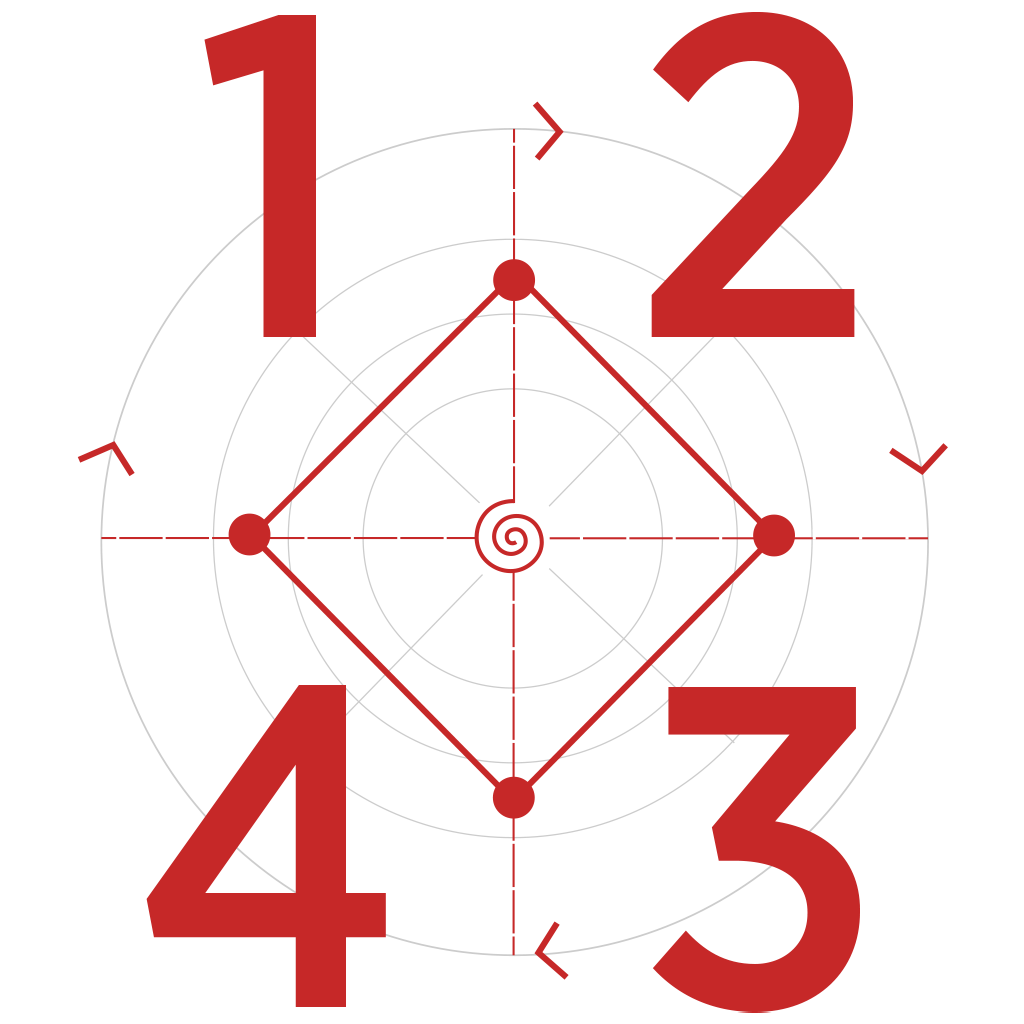
- 4 modules aligned to the four steps: Step Up, Step In, Step Forward, Step Together
- Individual coaching + team coaching + home-team integration
- Pre/post assessment to measure the shift in courage behaviour
- Drawing on deep research across multiple disciplines to guide personal journeys at organisational scale
Integrate
Tailored Corporate Programmes
Custom integration into your existing business transformation and leadership architecture.
- Modular design — use what fits your organisation and leave what does not
- Ongoing measurement and recalibration as your courage culture evolves
- Built to work alongside your existing frameworks, not replace them
The Process
From assessment to sustained shift.
A clear, proven process that starts with data and ends with lasting change.
1
Assess
Map your organisation's courage pattern across all four steps and every level.
2
Design
Build a programme around your specific gaps, strengths, and strategic priorities.
3
Deliver
Workshops, coaching, and team sprints -- tailored to your context and pace.
4
Measure
Pre/post assessment with 12-month follow-up to track sustained behavioural shift.
Coming Soon
The Courage Index
Once launched, this page will feature aggregated, anonymised benchmark data across industries and geographies -- so you can see where your organisation stands relative to others.
Register your interest to be among the first to access the benchmarks.
“In your organisation, right now: what is the gap between what your people know and what they feel safe to act on? What is the cost, in your culture, of being the person who raises the uncomfortable concern? What happens to the early warning that contradicts the consensus? What does it feel like, in the most important meeting you run, to say the thing that needs to be said?”
— The Courage Factor —