



Boards' view
Questions board members ask about courage and governance
Why do boards fail to prevent crises they saw coming?
Because knowing is not saying. Post-mortems of governance failures show a consistent pattern: individual directors held doubts, the doubts never became challenge, and the minutes record unanimity. This is the courage gap at board level — the distance between what directors privately know and what they formally say — and it is structural, not personal.
What is boardroom groupthink and how do we counter it?
Groupthink is conformity produced by collegiality: as the social cost of dissent rises, boards converge on the executive’s framing. Counters are structural and behavioural: assign rotating challenge roles, take first views independently before discussion, minute dissent respectfully — and build the individual courage of directors to use those structures. Process without courage produces documented conformity.
Is culture oversight really a board responsibility?
Yes — most modern governance codes make culture an explicit board duty. The practical question is instrumentation: engagement surveys measure satisfaction, not truth-telling. The Organisational Courage Audit gives boards a defensible answer to the real oversight question: what does it cost people in this organisation to say what they know?
How can a board assess whether the organisation has a courage gap?
Three signals boards can request: the Organisational Courage Audit baseline (systemic diagnostic across the Four Steps of Courage, benchmarked on the Courage Index); trend data on speak-up channels versus exit-interview themes; and the sentinel question to management — when did bad news last reach this board early, and what happened to the person who brought it?
What does the research say about courage and governance?
An ongoing four-year, 360-degree study of senior executives (191 participants) found the four courage behaviours explain roughly 75% of leadership effectiveness — and that 93.7% of leaders fall measurably short, with seniority no protection. Amy Edmondson’s research adds a finding every board should know: psychological safety declines as tenure and status rise. The most senior rooms are often the most silent.
How does a chair build a culture of challenge without damaging the CEO relationship?
By making challenge the norm rather than the event. When dissent is rare it reads as attack; when it is expected it reads as diligence. The chair’s tools: contract explicitly with the CEO about the board’s challenge role, model it first, protect the first dissenting voice visibly, and separate challenging the proposal from doubting the person. A strong CEO relationship is the product of real challenge, not its casualty.
What is the Courage Catalyst board edition?
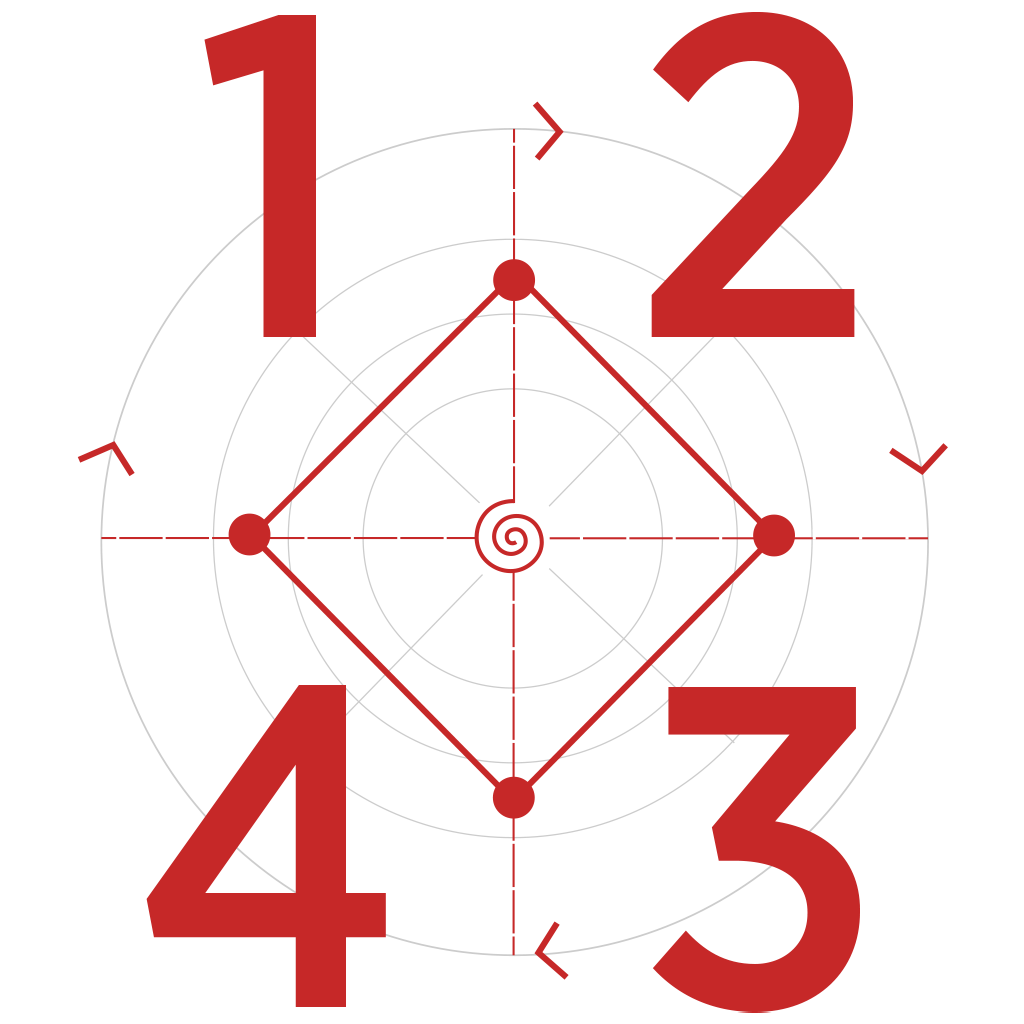
A one-day facilitated board retreat built on the Four Steps of Courage — Step Up, Step In, Step Forward, Step Together — adapted to governance work. The board works on its own live dynamics: the anonymised “most important thing not being said” exercise, the quality of challenge, and the unspoken items on its own agenda. It closes with a board Courage Map and an agreed challenge protocol.
How is this different from a standard board evaluation?
Evaluations audit structures and processes — composition, information flow, meeting effectiveness. This works on the behavioural layer evaluations cannot reach: what directors actually say when it counts. The two are complementary: many chairs run the Catalyst in the same annual cycle as the evaluation, using the audit as the culture-oversight evidence base.
What role does the board play in closing the organisation's courage gap?
The board sets the price of truth for the CEO, exactly as the CEO sets it for the executive team. A board that rewards early bad news, protects internal challengers and asks courage questions in every review sends a signal that cascades three levels down. A board that punishes surprises teaches the whole organisation to manage them out of sight.
How does a board get started?
Quietly and at chair level: a confidential conversation, then a short board briefing built on the research behind the HBR article “The Courage Gap”. Most boards then run the one-day Catalyst retreat and commission the Organisational Courage Audit as their culture-oversight baseline. From there, an annual courage pulse sits alongside the board evaluation.