



L&D leader's view
Questions L&D leaders ask about the one-day courage workshop
What is the Courage Catalyst workshop?
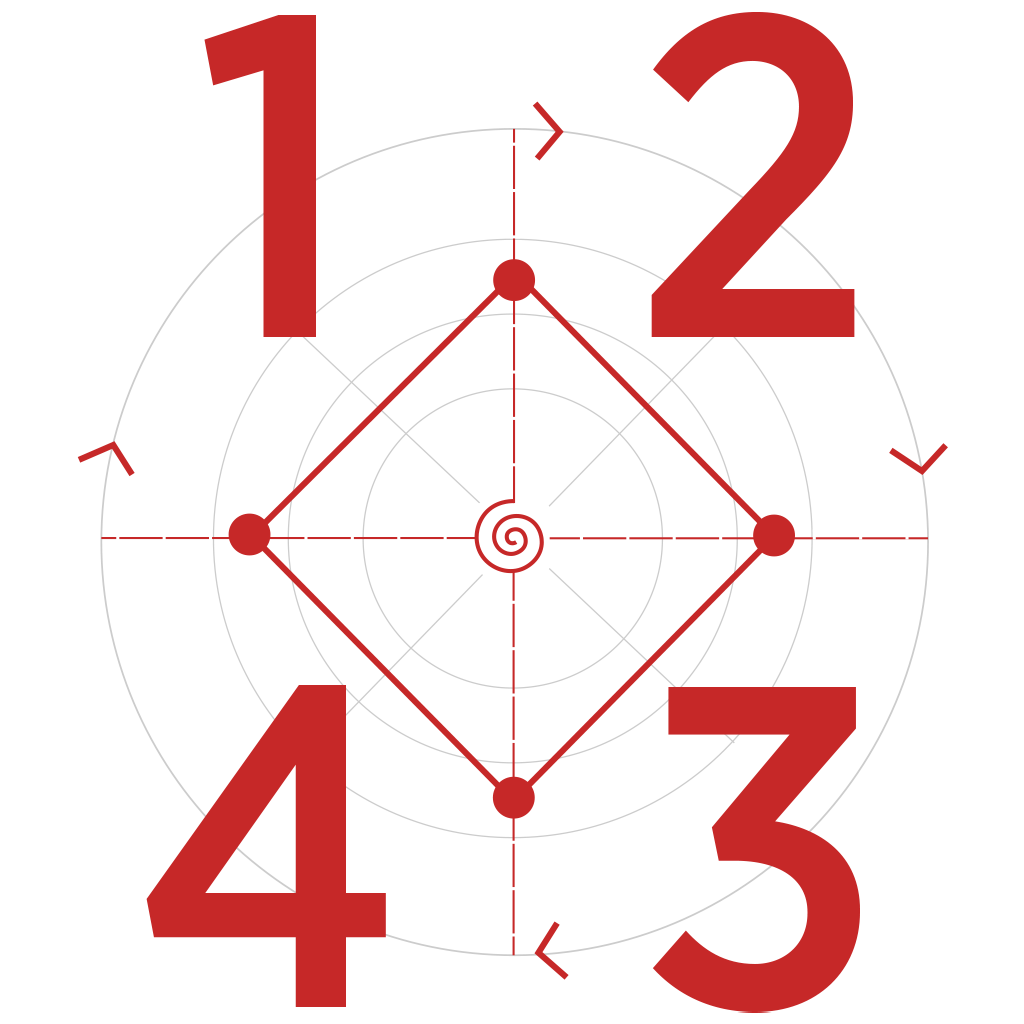
The Courage Catalyst is a one-day, in-person leadership workshop for 8–24 participants. It is a circuit, not a lecture: participants live each of the Four Steps of Courage — Step Up, Step In, Step Forward, Step Together — through embodied, experiential exercises drawn from arts, performance and somatic practice, and leave with a personal Courage Map grounded in their own real challenges.
What happens during the one-day courage workshop?
The day opens with grounding practices and a Courage Walk in pairs, where each participant surfaces a real, live courage challenge. Then the group walks the circuit: each of the Four Steps has an embodiment exercise, an inner/outer activity connecting it to real challenges, and a crystallise moment that locks in one commitment. The day closes with a shared Courage Map.
What do participants leave with?
Four things: a personal Courage Map naming their real challenges across all four steps, with next-level questions for each; direct felt experience of each step — practice, not theory; a shared vocabulary with everyone in the room; and four concrete commitments — one specific action per step, grounded in their actual working context.
How is this different from standard leadership training?
Most leadership development puts theory first; the Courage Catalyst reverses that. There are no case studies about other people — participants work on their own live challenges from the first hour. The exercises are embodied and experiential rather than slide-based, and every module ends in a committed action rather than a takeaway.
Is the workshop evidence-based?
Yes. It is built on an ongoing four-year, 360-degree study of senior executives (191 participated, 187 quantitative, 147 qualitative). The study found the four courage behaviours explain roughly 75% of leadership effectiveness — and that 93.7% of leaders fall measurably short on them. The workshop trains exactly those four behaviours.
What pre-work do participants need to do?
Minimal and meaningful: each participant takes the free Courage Quick Test (20 questions, about five minutes) and receives their individual Courage Profile mapped across the Four Steps. For deeper cohorts, the Full Courage Assessment (48 questions) provides a richer individual diagnostic that facilitators use to tune the day.
How do you sustain the change after the workshop?
The day is designed as ignition, with structured follow-through: the 30-Day Practice Guide (twelve practices across four weeks — one per step), the Courage Tracker for daily practice, optional 1:1 courage coaching (6 or 12 sessions), and the Team Courage Sprint for intact teams. The Courage Map itself becomes a working reference, not a souvenir.
Who should attend — and does it work for mixed groups?
It works for intact leadership teams, cohort programmes and mixed high-potential groups of 8–24. The anchoring mechanism — each person’s own real challenge — means the day self-calibrates to seniority automatically. Framing is adapted per population: executive teams work on live strategic decisions; emerging leaders on their first high-stakes moments.
Can the Courage Catalyst be embedded in an existing leadership programme?
Yes — that is a primary use case. It runs standalone, as the experiential core module of an existing academy or programme, or as day one of the 90-day Team Courage Sprint. In the six-month Courage Leadership Journey it is one of the workshop intensives, combined with assessment, 1:1 coaching, and peer circles.
How do we book or pilot the workshop?
Start with a conversation and experience the method: take the free Courage Quick Test, then book a briefing where we walk your team through the day’s design and adapt it to your population. Most organisations pilot with one cohort, measure the response, and then embed the Catalyst across their programme architecture.